


Almost all ways of transport differ from the usual European way in Russia, so i thought it might be interesting for u dear reader to read something about transport. I am not a transport expert, i just write my experiences, without scientific background.
Firstly about long distance transport: as you know, distances can be very long in Russia, from Moscow to the Pacific Ocean it takes 6 days by train. To the Urals little over 1 day, to Western Siberia 1,5-2 days, to Eastern Siberia (Irkutsk, Lake Baikal) around 4 days. And, on the other hand, from the big cities within 1-2 hours of train or driving there is usually absolutely nothing, just small villages.
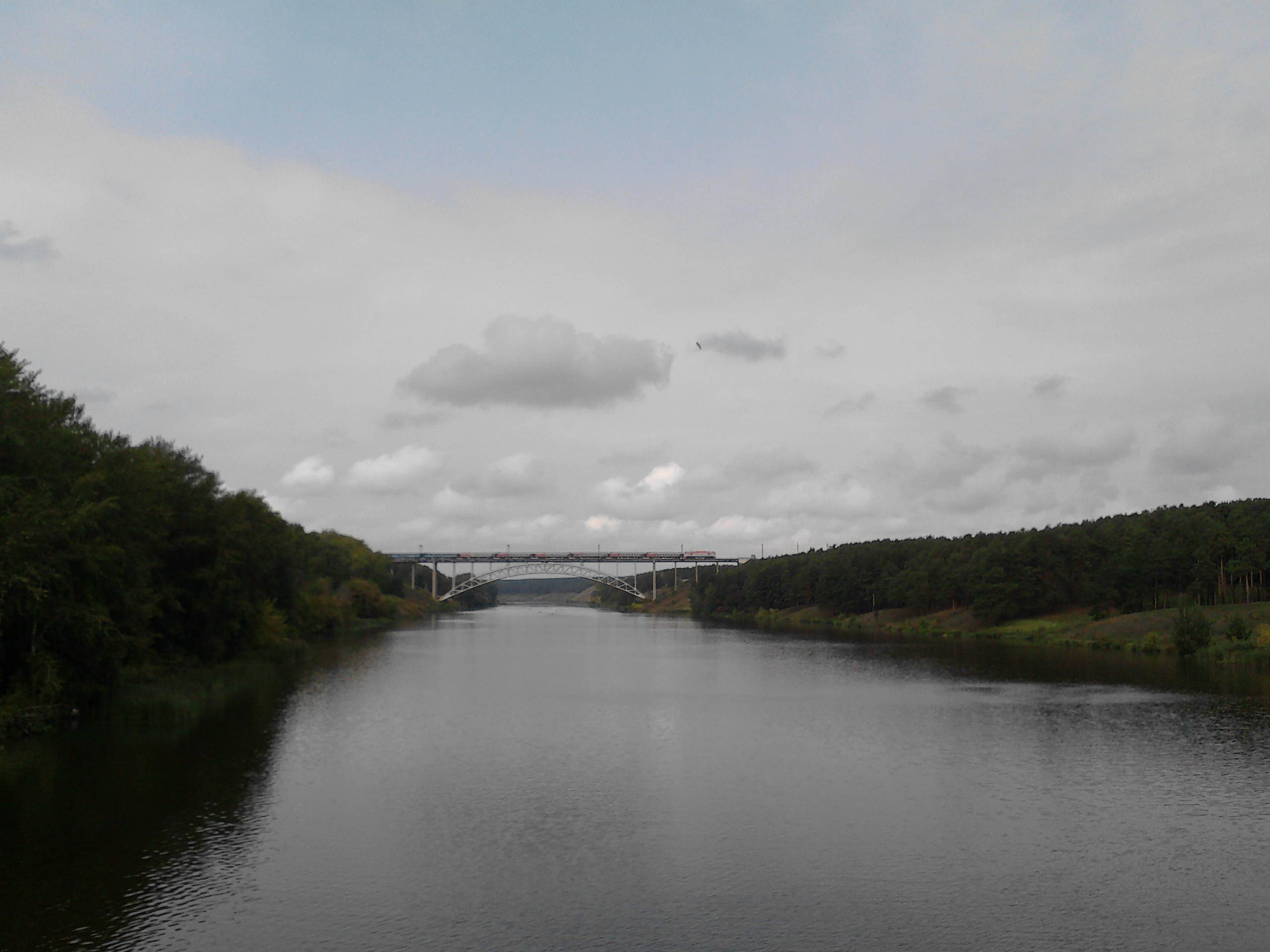 Therefore trains are almost all with sleeping places (only), which during the day can be used as sitting places, but not so comfortably. Usually people just sleep/lay during the day as well. I wrote earlier about trains, and their popularity, so although I write this post on the train from Yekat to Moscow (there is no wifi, not even socket, i will put it online in Moscow tomorrow, on Saturday), now i don't write more about trains, let's check it's alternatives. First, the car:
Between the big cities there are federal highways, from Yekaterinburg there are two (at least) federal highways leading to Moscow, and recently (maybe last year) the federal highway was completed all the way to Eastern Siberia. These federal highways are usually 2 lanes per direction, with stone or steel fence in the middle, but not nacessarily, some far eastern sections are simply twice one lane, like all small roads in Europe. But even they are twice two lane, it doesn't mean that there is not traffic light, or even left turn possibility (good luck for that ...). Intersections where all directions avoid each other, like in European highway intersections, are very rare, just near big cities. At other places, if you go to a village which is on the left side of the road, you either have to turn left (after long wait, dangerously), or go to the next place where it is possible to turn back, it can be 1-2 or 10-20 kms away, This place is a gap in the fence in the middle, and some area for 2-3 cars, you have to go there from the inner traffic lane (breaking there is dangerous of course), and wait there until you feel brave enough to enter the opposite side's inner lane, where cars come by 80-90km/h, and you are at 0km/h. At this places, the road is wide, so although there is no separate lane for turning back (and nobody cares about lanes anyway, often they are not painted at all), you have good chance that the Mercedes coming by 90km/h will have space to avoid you.
Roads in Russia are in very bad condition especially compared to Europe, you all the time have to watch the road surface, and you will still fall into big holes every now and then, because they make up most of the surface. Maybe that's why rich people like to buy Mercedes or Lexus jeep, with a normal car it's impossible to safely go by over 60km/h. And it's good if the inner height of your car is big enough, otherwise if your head is near the roof, you will hit it every minute...
I have no experience with going far (>150kms) by car or bus in Russia, but Julia, who traveled to Volgograd and Nizhni Novgorod with his father by car, and has more information abt this, said that overnighting at rest stations is very dangerous, and some routes itself are dangerous, especially if the traffic is low, "pirates" can come and rob you, and calling police doesn't help, even if the local police is not "business partner" of the people who robbed you, it will take hours when they arrive, and all what they do is to fill out different papers.
An other alternative for long distance travel is to fly, all big cities have airport, from Yekat there are flights to Moscow every 1-2 hours, many different airlines, most of them were born as a result of partial privatisation of Aeroflot. However, Aeroflot is still the biggest of them and they have the most modern aircraft fleet, smaller airlines still operate with the aircrafts what they got at the privatisation 20 years ago (for example Ural Airlines has many old loud aircrafts which are not even allowed in some EU countires now). According to our knowledge S7 (Siberian Airlines) is probably the best of them, they have new Airbuses, good English website, and promo fares if you book in advance.
Flying the same route is 2-2.5 times the price of the train, platskart. In winter, the train is cheaper, so the difference is more than is summer.
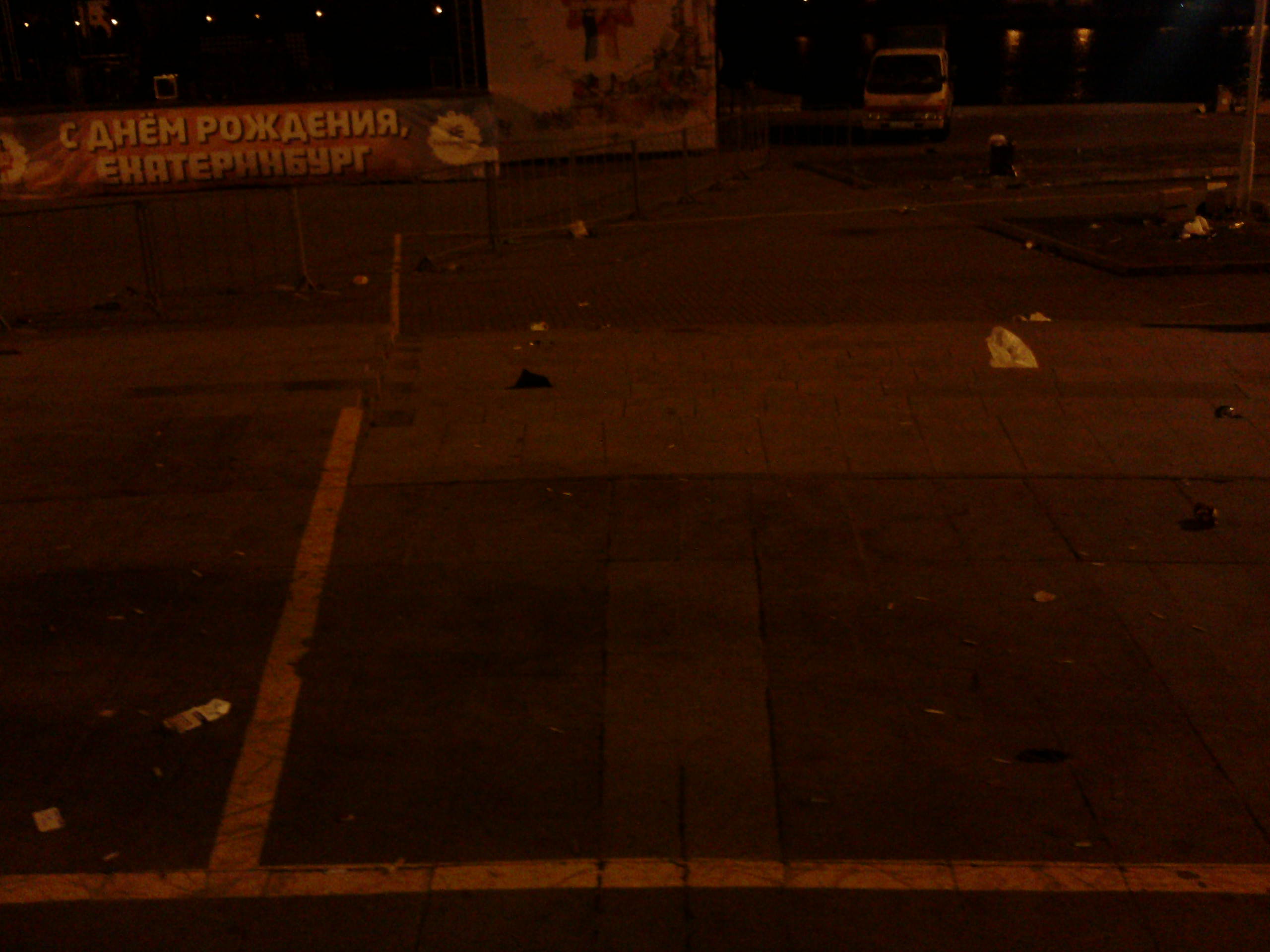 That's all about long distance transport, now let's see what alternatives you have for city transport. Firstly: forget bicycle. Yes, Russians know what is bicycle, and it's possible to buy it, but people only use it in parks, after they took it there by car, or pushed it on the pavement. It's simply not worth suffering with it on the streets, i guess it wouldn't surprise you at all if i say that there is not even a meter bikeroad in Yekat. But it's not true! There is, maybe around 1 km long, they just painted it this year. But: on this one km, approximately 4-5 times it crosses stairs, sometimes just 4-5 stairs, sometimes more. And this tells everything about the cycling "culture", or the lack of it, nobody considers bike as a transport device, and some stupid idiot city planners probably saw in their vacation in Germany that there are lanes for bikes, and they decided to make it in Yekat, just they forgot what is the purpose of it. On the picture, "bikeroad" in Yekat, unusable (unless you can make a 90° turn and then jump 4 stairs), but good marketing preparation for Expo 2020. Of course riding on the road is very dangerous, drivers are mad, road is shit, never try.
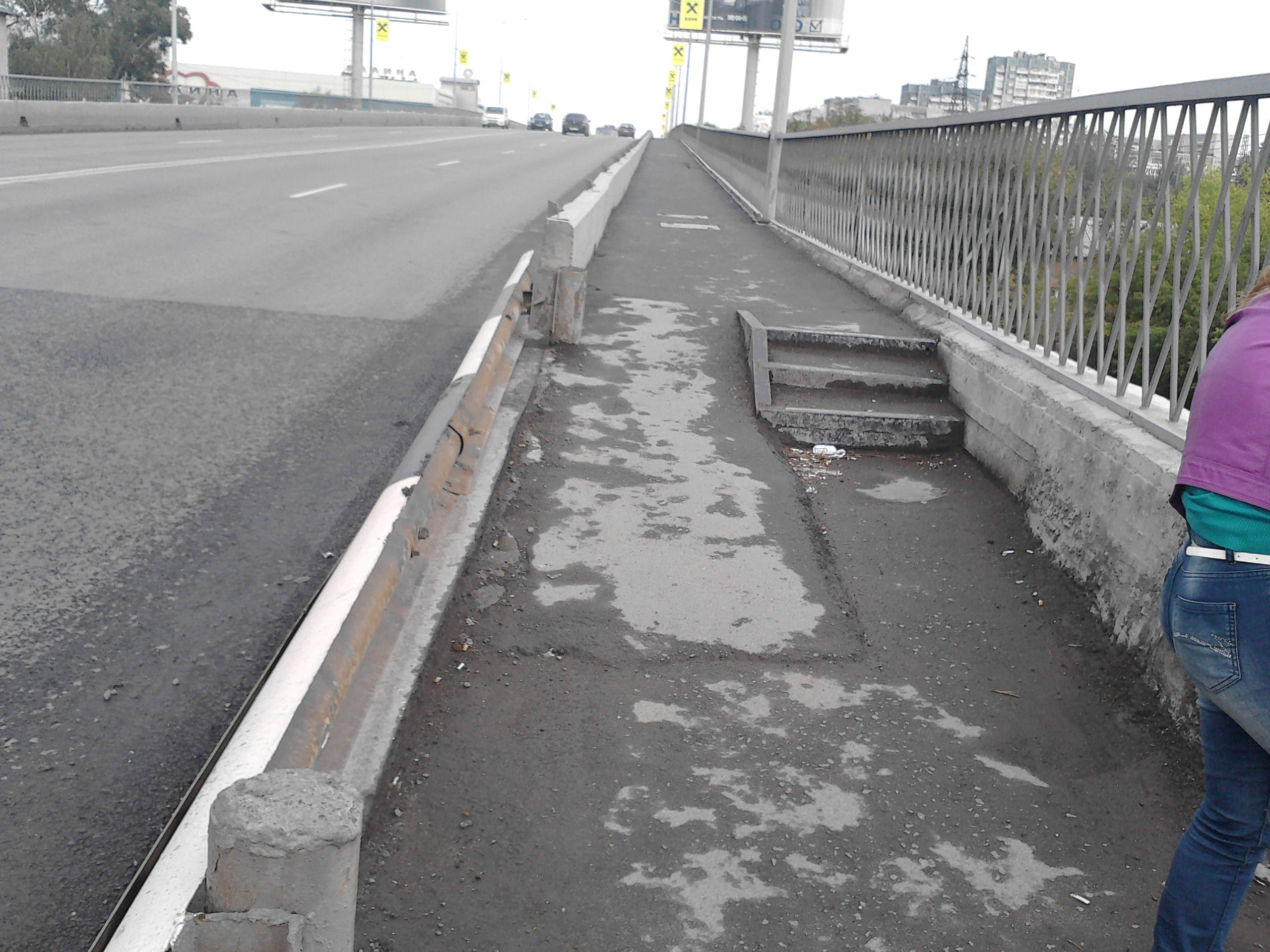 Walking or rollerskate: i tried both, in rush hours in the city center these two are the two fastest (faster than car), but rollerskating is not so enjoyable. I almost always beat the public transport by the skates, but pavement surface of often very bad, and at every crossroad there is a huge gap between the road and the pavement surface, and it is needed to completely stop, and step over the gap. Also, i only fell once, on tram rail (when crossing it), but it's very likely to fall as there are huge holes on the asphalt (or no asphalt for a few meters at all). On the picture usual pavement on a bridge near our home.
Buses: as i already wrote, our bus, whith what the 4 kms to the center takes around 30mins, in rush hour 40, comes every 7-32minutes according to the official timetable. In my opinion it already makes it unusable, but to top it up, there vere several occasions when we waited over 40mins. Also, accoring to the timetable, every day the last is at 23:15, that sounds quite good, at least a fix time. But in reality, there are no buses after 9pm, or around 8pm in weekend. So if u wait for the 23:15 bus you can wait until morning or take a taxi like everybody else. But even if you catch a bus, after a "fast" (understand: 30-40kms/h) few hundread meters in our district, it stops at the end of the queue, and it never again reaches such futuristic speed.
Trams, trolleybuses: there are several problems with them: firstly, their routes are often stupid, especially for trams. Secondly, they also stay at the traffic jam, bus lanes are non existant, the tram rails are always asphalted allowing careless drivers to even block the tram for only the hope of getting a few cars ahead. Sometimes the 300m route between 2 tram stations can take 10-15minutes in the center. Also, often cars crash each other or the tram on the tram rails, and in this case tram opens it's doors and do svidanie, if you don't want to wait an hour or two to get home without buying an other ticket for bus or marshrutka. Same for trolleybus. And also, the trams and trolleybuses are often to depo only, not the full length of the line. Especially in rush hours, when there are a lot of people waiting, empty trolleybus is only to depo, and then, 20 people has to get on a 13-person marshrutka (minibus) to get home somehow. That's why marshrutkas take over 50% of all passenger kilometres while the capacity of other public transport is many times more, but the empty trams and trolleybuses are publicly operated and the marshrutkas are private companies. In in the state company, nobody cares, especially about passengers.
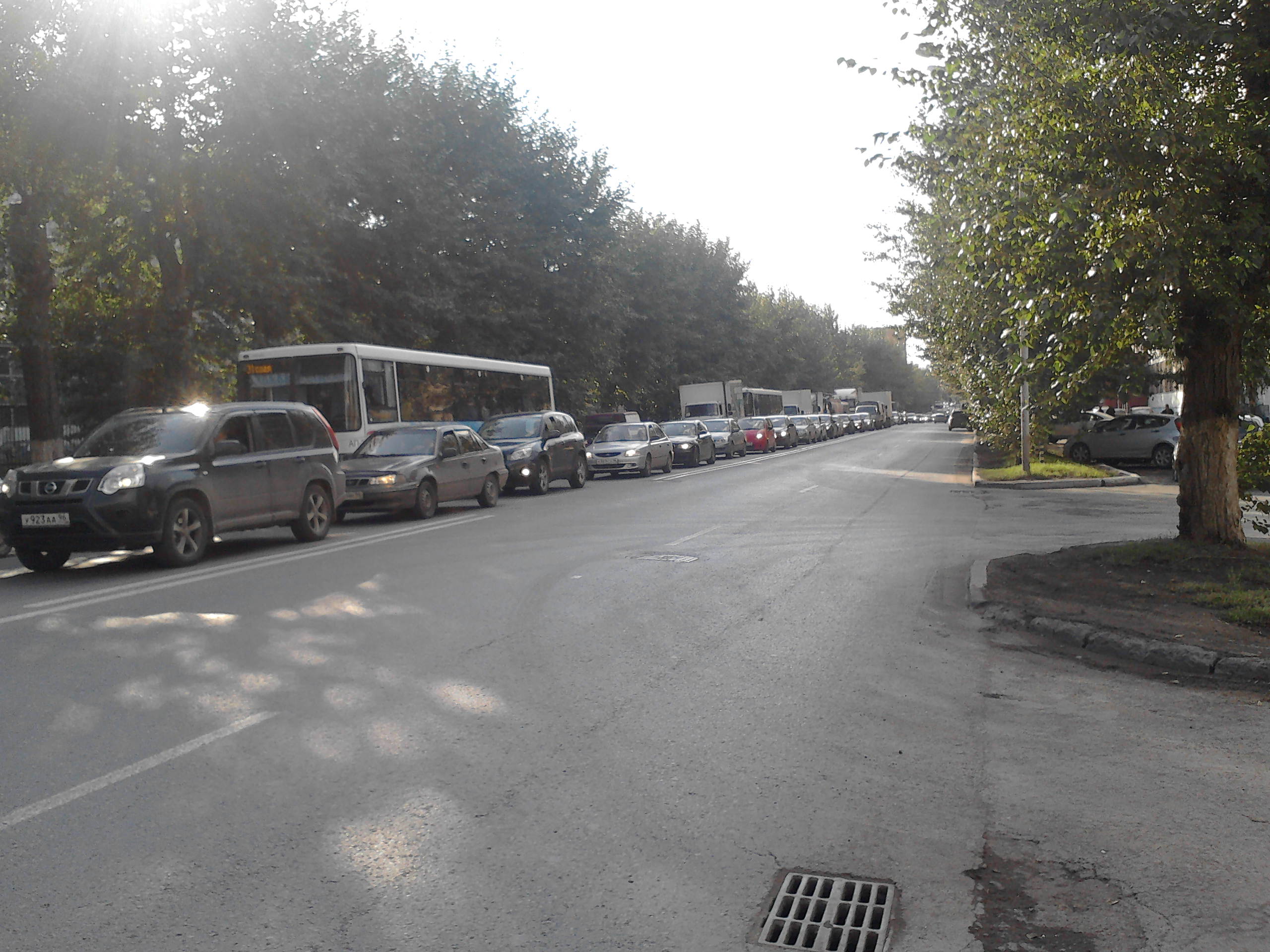 Car: the same traffic jam issues, plus, if your bus or marshrutka or tramway has accident, you just walk away and buy a new ticket, but if your own car, that's different. Also, driving in Russia is bad for your nerves, with European driving you cannot even make the futuristic 20kms/h average, because everybody who wants to reach such good speed, has to be very agressive and has to not care about rules. For example, at Sovietskaya/Uralskaya crossroad, it's impossible to turn left in green. So, even buses wait for the red, and then, very dangerously a few meters in front of the crossing cars, they turn left. This usually succeeds after 2-3 reds, because they need to be first at the crossroad and the driver has to collect all courage.
Of course every now and then there are accidents, which make trffic jams even bigger, if it is possible at all.
![P250812_13.46_[01].jpg](https://m.blog.hu/cs/csabiinrussia/image/P250812_13.46_%5B01%5D.jpg) Finally, a little bit about commuter transport: Koltsovo, 15-20kms from the center of Yekat, is one of the biggest suburbs of Yekat. It's also the place for the airport. So let's see what are your choices to commute: bus #1 to center takes 1 hour, in rush hours around 1.5 hour. Costs only 18 roubles, a single ticket. You can go by car, if you drive agressively and illegally enough, maybe you can make it in 45 mins in the morning. But more like 1 hour. And, the most comfortable solution is Airport-Express train. It is always empty, you have plenty of space. It runs twice a day, one is in the middle of the night, one is in the middle of the day, it takes exactly one hour (but no traffic jam!), costs 50 roubles, and thanks to it's timetable it's completely unuseable.
Finally, a little bit about commuter transport: Koltsovo, 15-20kms from the center of Yekat, is one of the biggest suburbs of Yekat. It's also the place for the airport. So let's see what are your choices to commute: bus #1 to center takes 1 hour, in rush hours around 1.5 hour. Costs only 18 roubles, a single ticket. You can go by car, if you drive agressively and illegally enough, maybe you can make it in 45 mins in the morning. But more like 1 hour. And, the most comfortable solution is Airport-Express train. It is always empty, you have plenty of space. It runs twice a day, one is in the middle of the night, one is in the middle of the day, it takes exactly one hour (but no traffic jam!), costs 50 roubles, and thanks to it's timetable it's completely unuseable.
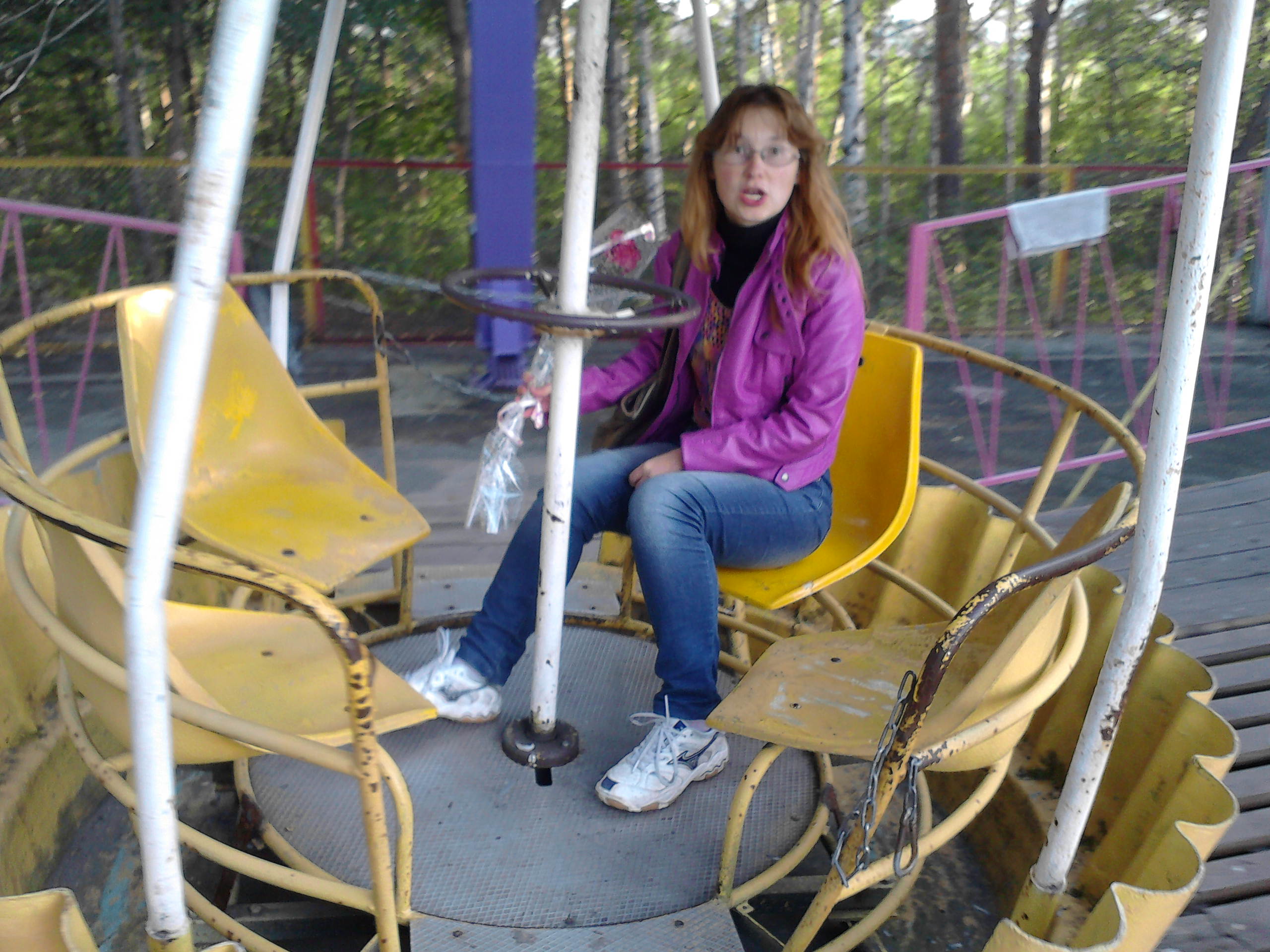 Transport is the biggest issue in my experience is living in a big city like Yekaterinburg, although i worked for home, so i didn't face work related issues which also can be huge, donno. On the picture, the best transport device what i met in Russia :)
Thanks for reading it, quite long, isn't it. There will be one more post and then again the blog takes a long rest.
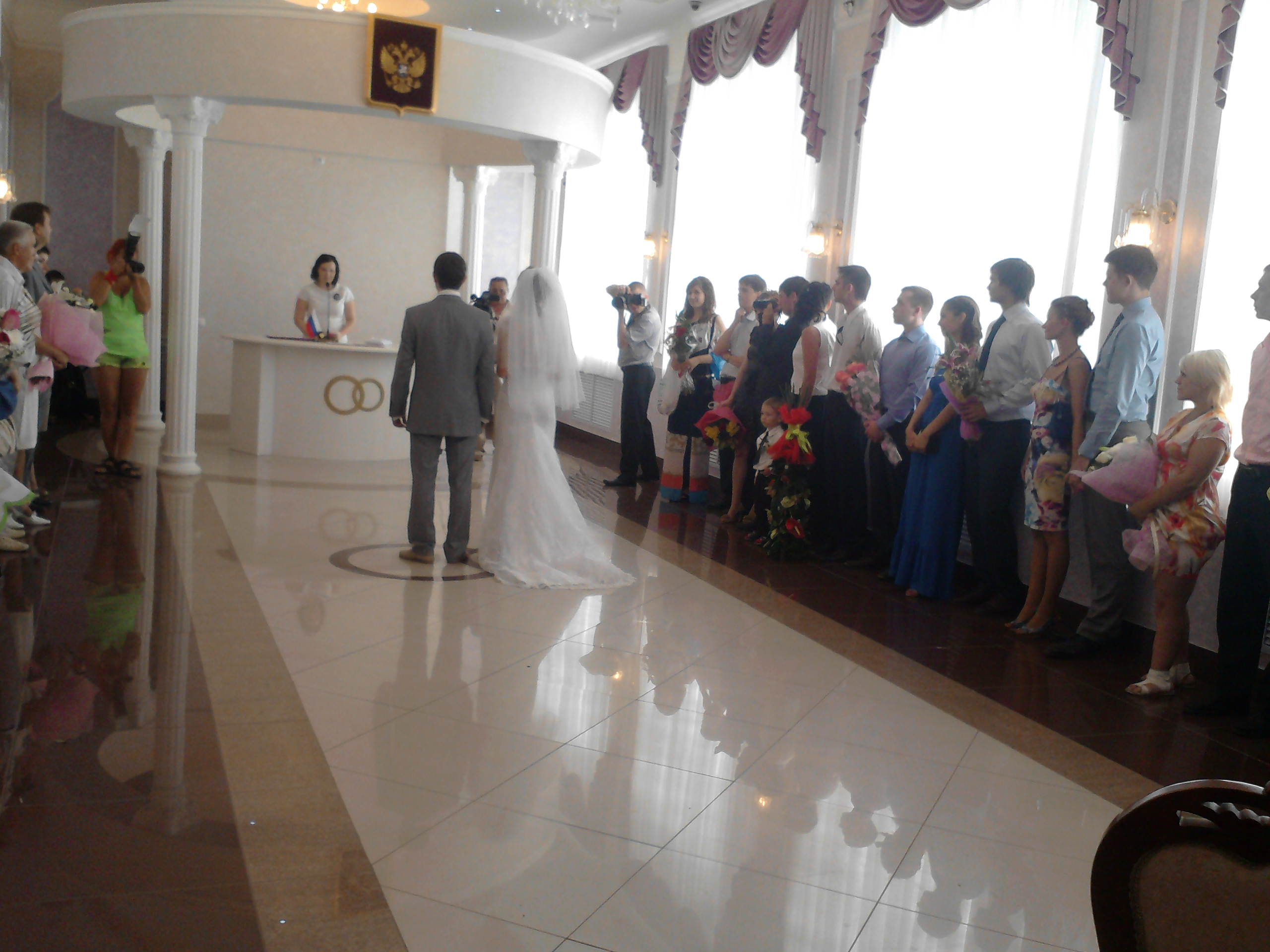 I planned to write blog regularly in August, as u can see i didn't manage. But now, i would like to pay the debt back with a relatively long post about weddings. I hope you enjoy. Now my plan is that i write 2 more such long posts during the next 8-10 days.
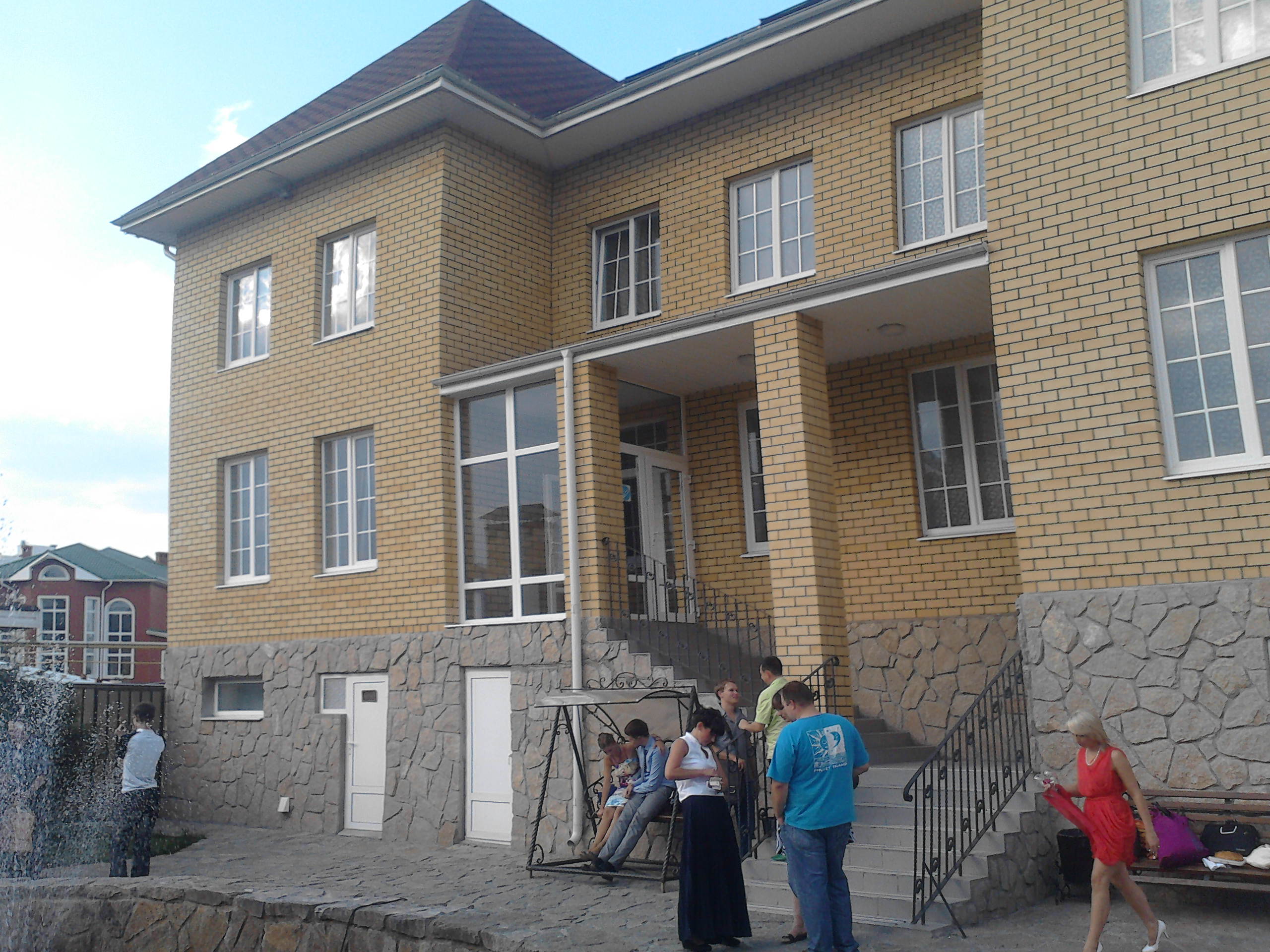 After this, more pictures are taken in different locations, in this case at Sverdlovsk railway headquarters (beautiful huge building with nice well-maintained small park in front of it) and at Botanic garden, but although that was closed (it's open till 5 on weekdays and on weekend it's closed, so it's very easy to visit by people who work), they still managed to take nice photos in the green area in front of the park's entrance. The couple was transported by a white Audi owned by some friend, lead by two motorbikes (friends). Others, including me, were transported by a tourist bus, it was very hot and the bus didn't have air conditioning, and of course useless to say that there was traffic jam (one big, consisting the whole city), so it took an hour to complete around 8-10kms in the city, and this is better than usual rush hour speed.
![P100812_19.46_[01].jpg](https://m.blog.hu/cs/csabiinrussia/image/P100812_19.46_%5B01%5D.jpg) There were quite a lot of guests, it took long while everybody made some small speech before giving the present, which was only a lot of money (of course i don't know everybody's amount, but over 100 euros for sure) in most of the cases, we gave real present along with the money, Irina did, and a guy who i don't know. Our real present was a wooden spice shelf with 12 spices from Lidl (bought in Hungary).
There were quite a lot of guests, it took long while everybody made some small speech before giving the present, which was only a lot of money (of course i don't know everybody's amount, but over 100 euros for sure) in most of the cases, we gave real present along with the money, Irina did, and a guy who i don't know. Our real present was a wooden spice shelf with 12 spices from Lidl (bought in Hungary).![P180812_15.15_[01].jpg](https://m.blog.hu/cs/csabiinrussia/image/P180812_15.15_%5B01%5D.jpg) I shortly write about the second wedding, which was between Katya and Lyosha (for both of them, first appearance on the blog). I will try to point out the differences only. Firstly, there were less people, there was no bus, just 3-4 cars (rented, with driver). The couple was transported using a white rented Mercedes. At this wedding, i also went to "vykup", at Katya's (very cool) flat, Layosha and his friends arrived that Lyosha had to answer different questions about Katya, or, without knowing the answer, "bribe" the firends of Katya (incl. Yulia) to let them preceed still. It was funny, and Lyosha fortunately managed, so They could go to the registration office after drinking some champagne with us. The registration office was a different one, but same system, wedding every 15 minutes, and there was 20 mins delay so we had to wait. I was a bit afraid that due to the delay the registration staff will not give full hearth, but i was wrong, the ceremony was nice and they didn't hurry to much.
I shortly write about the second wedding, which was between Katya and Lyosha (for both of them, first appearance on the blog). I will try to point out the differences only. Firstly, there were less people, there was no bus, just 3-4 cars (rented, with driver). The couple was transported using a white rented Mercedes. At this wedding, i also went to "vykup", at Katya's (very cool) flat, Layosha and his friends arrived that Lyosha had to answer different questions about Katya, or, without knowing the answer, "bribe" the firends of Katya (incl. Yulia) to let them preceed still. It was funny, and Lyosha fortunately managed, so They could go to the registration office after drinking some champagne with us. The registration office was a different one, but same system, wedding every 15 minutes, and there was 20 mins delay so we had to wait. I was a bit afraid that due to the delay the registration staff will not give full hearth, but i was wrong, the ceremony was nice and they didn't hurry to much. The animation person was better, the games were less stupid, i enjoyed them more. I even took part. Of course not in the one with money, which was even more strange (understand: awful) than last time, but only one, not three. And the normal games were good, i even "won" (everybody won) a drink, Yulia won hand desinfection tissues). Here, we also only gave money, no real present. Dancing, talking was the remaining part of the wedding, after 10pm the thing ended, the couple left for their hotel room, we went to city center to drink and go home.
 Last Sunday I departed home, after Julia's birthday party. My train was at 5am, of course there is no transport at that time, so taxi was used. The train was Habarovsk-Moskva, seemingly a lot of people came from far with it, i was just thinking that this guy gets on the train for this last small section (31 hours). I slept very well, right after getting on i slept, and got up late morning, and even during the day slept 2-3 hours, and then at night 11 hours, so all together i spent almost 20 out of the 31 hours by sleeping :). I had upper place (what i don't like), that was also a reason why i slept a lot, there is not so much else to do up there, and coming down always makes me think that i disturb the people under me.
 The train was not full, but after 2 hours there was a station where it became quite full. I had lower, which is cool. There was one strange thing: a few hours before the Russian-Ukrainian border, an Azeri (or Tajik maybe) couple got on, without any luggage. They filled the Ukrainian migration cards, they even asked for my help (although i either had no idea how to, but i "improvised" fast). On the Russian side of the border, a funny thing was that just before the border guard reached our section, the guy got a call, and his ringtone was something like "Allah, aaa" :) I thought this guy really doesn't want to cross the border :) Also, the guy next to me told him that he should turn it off immediately. But maybe it was too late, or it didn't matter, they were removed by the border guards and the train continued without them coming back. I had such feeling that they are experienced "border-non-crossers", that's also why they didn't have luggage.
 On Firday with Julia we went to opera, earlier on victory day we bought tickets for Pikovaya Dama (Lady of Spades, maybe). We wanted to see Swan Lake ballet, but that was in unsuitable time for us, and other things were expensive. So we decided this opera, anyway it was long time ago when i have seen opera (very long time ago), and the same applies for Julia. The ticket costed 150roubles, 4 euros approx, it wasn't for the best places, but i donno what is good place in opera because there is no really such place from where you see both the scene and the musicians well. From our place we didn't see the musicians at all, but the scene quite well. We were on the 3rd level, but the levels were not so high, it didn't feel like that we are looking down to them, and there is even a 4th floor, so 3rd is not too high. The reason why we didn't see the musicians was the wall at the end of the tribune of course.
 As outside it was over 30 degrees, and inside maybe 22, and it wasn't sold out, so we could position ourselves comfortably in the anyway comfortable seats, after the play started and they made darkness on the tribune (of course they made), i felt like i immediately fall asleep. And this idea didn't leave me for the first hour, sometimes even reached proceeding regarding the openness of my eyes. The play - what i saw from the first one hour - was good, the singing was pleasant to hear, and the decoration and the costumes were really fantastic.
 On Sunday there was Maiskaya Progulka (May Walk), many people from Yekaterinburg and from all over the world (one -incl.me- even from Hungary, can you imagine) take a 18, 32 or 50km trip around the suburbs of Ekaterinburg. We with Julia, Dasha and Marat went to the shortest one, also because it was over 30 degrees. In the morning the registration was tipical russian: long queues, no information, what information there is (which queue is for what), has nothing to do with reality. And although the event homepage didn't mention any price, and in the previous years it was always for free, a fat babushka is sitting under a sunroof and asking for 50 roubles (not written anywhere even in front of her, just she tells it to everybody) from everybody in exchenge for empty registration paper (what i could print a hundred if i know it). Of course not giving any receipt or invoice, not even counting how many empty registration papers are gone, and holding the money collected in her hand. If i had to guess, i would give 85% chance for that it's her pocket money, any if she finds out that she wants to buy some new clothes, she will also come to the finish and let's say collecting money for crossing the finish line. This didn't happen (or she already collected enough when we arrived there :) ), but i wouldn't have been surprised.
 The trip was good, more than half of it was in a park in the southeast of Yekaterinburg, the rest on the streets of Yekaterinburg. The crowd was really huge, there was no such case when either in front of us or behind us the next people would be more than 50 meters away, but usually it was less than 10 meters. I don't know our time, but we didn't want to do it fast, we took two longer (maybe 30mins) breaks as well. The weather was clearly to hot for this, but in the forest it was ok, and as Dasha said there was such case with 5 degrees and rain, what we wouldn't exchange for this.
 In Russia and the former soviet republics there is a special culture of confectionery nowadays. This post is not about why, i just point out some things which are unusual in Europe.
 Firstly, small pieces of chocolate, packed one-by-one, sold usually in a package of 250 gramms, are very popular. And they have different types, and all brands use the same type names, so for example all brands have "Bear in the north" (Мишка на Севере), or "Meteorit" (метеорит). Our, my mother's and basically everybody's favourite is Belochka (белочка), which means squirrel. According to the site of the nowadays most popular producer, Babayevskiy, which owns now the world famous (more than 150 years old, but in soviet times grown huge) Krasni Oktobr factory in Moscow, Belochkas are: "domelike sweets with the body made of chocolate and nut praline with crushed hazelnuts, covered with dark chocolate". Belochka was "invented" in 1944, and other chocolates with long-lasting popularity also date back to this era. Obviously, in Soviet times there were no dozens of producers making "Belochka" and "Mishka na Severe", etc, just one huge factory.
 Julia doesn't like it, but i also like Lastochka (Ласточка), which is usually yellow and a post-bird is on it. I don't know what is it made of, but it's different from Belochka, is has more like some fruity taste.
  The other thing what i write about is cake. Here it is very common to buy cake without any special event (no birthday, no anything), just because they are delicious and cakes are one of the very few things which are cheaper here than in Europe (transport and energy are other ones, and that's it). One cake is usually 500-720 gramms, and costs 3-6 euros, but there is a wide range of them for 3-3.5-4 euros, and i honestly don't see the relation between price, quality and size, it seems to be quite random to me. There is a brand called Biskitni Dvor who has very good cakes, and some of them are 3 euros, some others are 6-7, and the 3 euro ones are often bigger...
 Two more things about confectionery, the first is that there is a product which gained popularity during soviet times due to the limited availability of cakes and sweets. It is called Sgushenka (сгущенка) or Sgushenni moloko, it is made of milk and sugar basically, and it's sold in tins in order to make it harder to open (u still need to keep it in fridge). Sgushenka is quite cheap, and it's cool to put it on bread and eat it, although it contains a lot of sugar which makes it be unhealthy, so don't eat the whole tin up at once. Also, you won't manage to eat the whole tin up, because it's very heavy.

 Yesterday, on the 9th of May, there was victory day in former soviet republics. Just in case somebody doesn't know, on the 8th of May in '45, in the late evening, the nazi Germany surrendered, and the war ended. The event took place in the central european timezone, but according to Moscow time (2 hours ahead of central european) it was already the 9th, that's why the end of war (Victory Day also in some countries) is celebrated on the 8th in Europe (in countries where it is celebrated at all), and former soviet countries celebrate it on the 9th, as Victory Day or Great Victory Day.
 From the place, we could see all military machines quite well, but not the troops, which were located on 1905 square, by the Lenin statue. The tanks and other machines were interesting, and they were also shooting with cannons. The "star" of the parade was the
 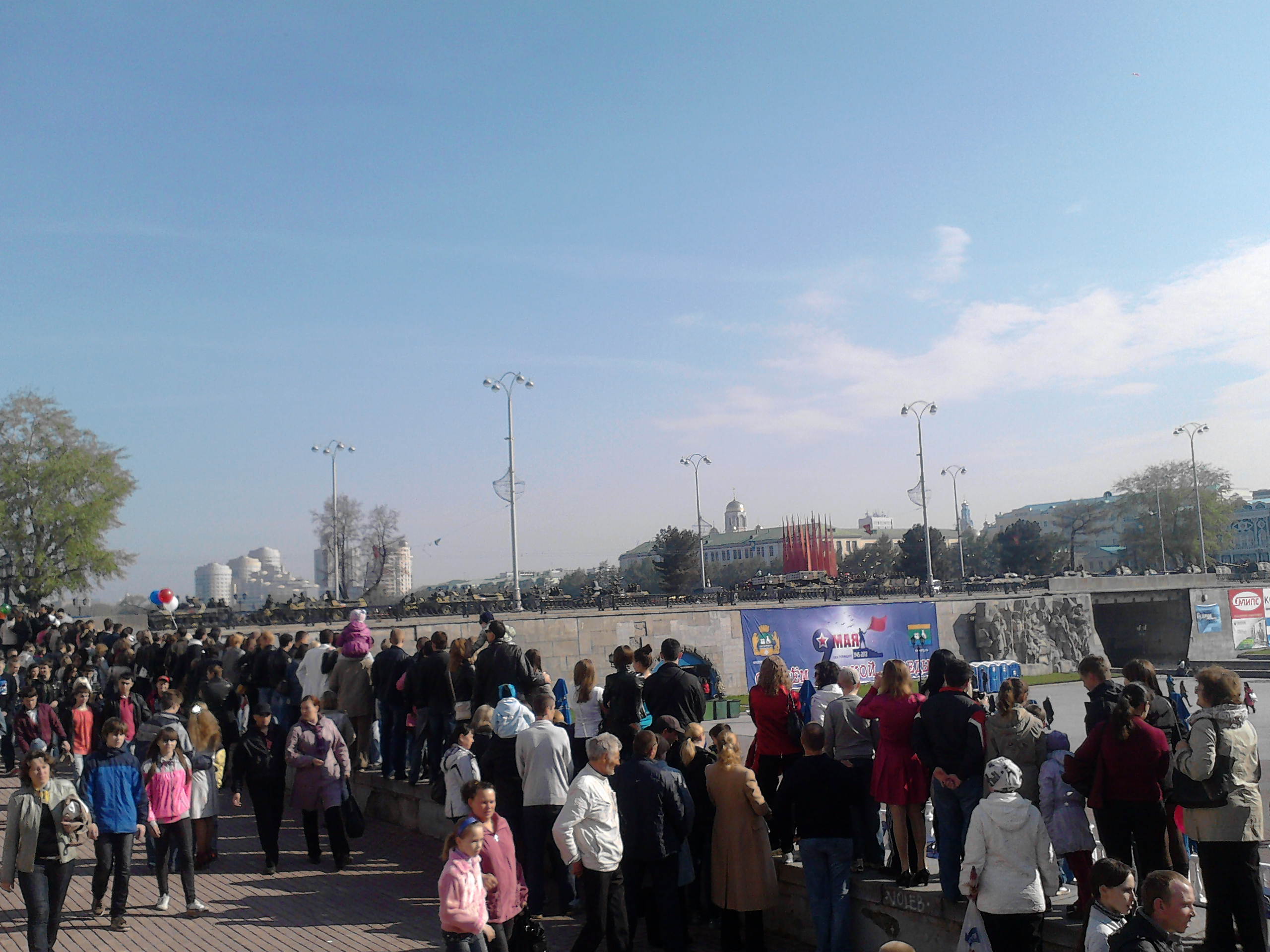 After the parade we spent some more time in the city, visited wartime car exhibition and listened to a very short concert (they played 1 song after 10-20 minutes of settings and went away). We luckily caught a marshrutka home to catch the Moscow parade on tv, it also started at 10, just in Moscow time. It was cool, of course it's bigger than Ekat's but already at Ekat's is almost impossible to catch some place from where you can see everything, in Moscow it's completely impossible, all good places are reserved for veterans and politicians and the fairly good places are occupied by early morning fans (6h-7h) :) But we had quite ok place, just not at 1905 square. I bought magnet and victory glass cup. The "colors of victory" are orange and black (and of course red), on this day you could buy practically anything in this color, clothes, cups, magnets, flags, etc.
 After watching the Moscow parade (which was really fantastic, fortunately the speeches followed the "technics", so we did not have to wait for country leaders to finish their speech), all tv channels played Russian and Soviet war movies (already 2 days before 9th as well), we watched some, they were good. I don't remember titles. Also Julia downloaded one in witch people playing war game go back to the WWII, title is "We are from the future" (Mi iz budushestoe... or sthg similar), i recommend it. It's not a light comedy, but not so depressing either, and it's exciting. I won't tell u who wins at the end :)
 In the evening we went back to the city, at 8 o'clock there was a free concert in front of the uni. Irina called us to bring some beer as near the concert they don't sell beer. We had 2 baltikas in the fridge so i brought them, of course we were not let in the concert area with them, and Irina didn't show up for long, so we enjoyed the first few songs from outside. Inside they only sold non-alcoholic beverages and ice-cream. Many people were there, and very famous bands performed (one from Ekat and one from St-Petersburg). I don't know their names and i couldn't find them, i will ask Julia and put a Youtube video here in the next post.

 Kamensk 300+
 Iset at Kamensk
 a local
 a non-local
 a Kamaz
 Julia's music school


 The cannon
 On Saturday i went with Dasha and Marat to watch a futsal match Viz-Sinara Ekaterinburg (ВИЗ-Синара) - Dinamo Moskva. In Russia futsal is called "Mini-football", also officially (the association is AMFRF, Association Mini Football Russian Federation). Dinamo Moskva was first before the round, Sinara (
 After Confucius with Julia we went to a bar called Coyote Ugly (picture from the film about Coyote Ugly). It is popular in USA according to it's self-marketing, it's speciality is that u can (and employee dancers do so) dance on the bar. It's fun, although the prices are extremely high, i preferred to buy Baltika (beer) in the supermarket and drink outside, hide the other one and later come out and drink the other Baltika as well. Inside a bad beer costed 5 euros. Price reminded me to Finland, just donno how can people afford it here, as seemingly they were not all oligarchs, gazprom leaders. But about this, i don't write now, because of 2 reasons: 1.: it's long, 2.: I am just in the process of understanding it.
 On Friday evening, at 8pm, out train departed from Yekaterinburg to Tobolsk. The train's final destination was Nizhnevartovsk (Нижневартовск), and a few hours after Tobolsk it also stopped to Surgut, which might sound familiar for Hungarians as SurgutNetf had shares in MOL, the Hungarian oil company 2-3 years ago. According to the wikipedia, "Nizhnevartovsk is the center of the West Siberian oil-producing region and one of the wealthiest cities in the country". And, according to Julia, a huge prison works there. So the wealthy residents of Nizhnevartovsk probably fly, because on the train we mostly saw people who we could imagine easily as former or future prisoners, or friends of prisoners. But i have to mention that although it was their look, their behaviour was absolutely normal, even if not as firendly as it is usual on train in Russia. The (also prisoner-looking) guy with whom Julia was talking for a minute maybe, said that in Nizhnevartovsk there are a lot of Northern Americans working, for very good money. In textile industry ... of course not, in the oil one. :)
 The train arrived at 6am to Tobolsk, being zero minutes late of course, on the peron there were a lot of pavilons selling different food and alcohol products to those travelling further to the western siberian oil fields, to Surgut or to Nizhnevartovsk. The railway station is 10kms away from the city, this is because the railway is on the left side of the river Irtish, and near Tobolsk, which is on the right side, the river is wide, so they made railway bridge 10 kms further north, where it is more narrow. The view from the railway bridge is always cool, now specially, as the Irtish is forzen. Btw the name Tobolsk is after the river Tobol, which starts 1-2kms south from the city, as a branch of Irtish.
 After warming up at the café, the weather also turned sunny, the snow melted to it was plus during the day. We went back to Kreml, where we walked around, and then visited the museum dedicated to the history of western siberia. It was quite interesting, and huge. In the 18th and 19th century, the Russian Empire was divided into 8 governorates. Tobolsk was the capital of the siberian one, the biggest one, the tsars also visited Tobolsk often to meet the actual Governator. Another interesting fact (it sticked to my mind) is that Mendeleev, the creator of the periodic system of elements, was born here, although did not spend his active year in Tobolsk.
 The train ride back to Tyumen (Tyumen is on the way to Tobolsk, Tyumen is on the Trans-Siberian main line, Tobolsk is not, the Nizhn. branch starts in Tyumen) was quiet, we half-slept, but as we did not book linen, we did not fully lie on our place. The way was just 4 hours, but we felt like we arrived from winter to summer, already when getting near Tyumen sun shined in the window, and snow was nowhere.
 Our Couchsurfing host, Olga was waiting for us at the station, we went to the enbankment of river Tura (also branch of Irtish), where many people were biking, roller skating, walking. The river was not frozen, but huge ice plates were floating on it. It's not so wide and there are a lot of bridges over it. Then we went to the center where there is a newly built huge park and a circus, with entertainment park and monuments. It was really nice area, our first impressions of Tyumen were good. Olga lives not far from the center, in a new, modern apartment, and most importantly she has 2 very kind and active snails. So in the evening there were the following activities: chatting, washing the snails (Olga let us to do it), and playing Italian cards.
 On Sunday we went to see a museum, about life in Tyumen in 19th-early 20th century and about civil war in western siberia (first was the larger part). It was quite interesting, was a good idea to go there. Then we took a long walk in the city, seeing all interesting places and having a long chat, and taking a lot of pictures. Tyumen is a center for oil and gas business, all big russian oil companies are present here, there is a huge "Tyumen State Oil and Gas University", and a lot of different institutes and authorities realted to oil and gas. Gazprom also has a huge glass-building in the center. Tyumen oblast is the richest one, and the 3rd biggest one as it's northern end is the north sea. Therefore, eskimos also live in this oblast, donno if they are also very rich or not. But at least they can get cheap oil :)
 In Tyumen there are a lot of nice, well-preserved parks, statues, new buildings, it's nice to walk around. There are two main roads, paralel to each other and both one-way, the road of Rapublic and the Lenin road, if you walk along these, you see everything interesting, although they are long. And the railway station, which is also modern and clean, is 10 mins walk from the middle part of Lenin road. Julia bought some local newspapers for the way back to Yekat, i just expected to eat, drink tea, and sleep (as we had linen booked for this one). The train was blue by Belorussian Railway, coming from Irkutsk and going to Minsk, for most of our travel mates our presence (five and a half hours) was just an eyeblink. We slept a bit, Julia read the newspapers and watched a film on netbook, I made tea. Btw almost forgot: Olga had cool tasty tea straight from China (a friend brought it).
 On Friday Julia got some tickets from a friend for philharmonia. Unfortunately I was late a bit, because I was working home when Julia called me that it starts in an hour. But I was only 10 mins late, and I would have been in time if there is no huge traffic jam on Lenin street (as usual btw), but I was only let in in the break, along with 20-30 other latecomers. I have never been to such (I think), and as I saw the price of our ticket next time is either not tomorrow, but it was a really unique experience. Also, the building is very nice, well preserved. Picture is from the site of the Свердловская Государственная Академическая Филармония.
 On Saturday we went to Auchan which is far away, to do some shopping. Of course we bought a lot of things (mainly food), and after Auchan we went directly to Avto-Chelyabinsk MHL hockey game. We were already 10 mins late as the Auchan bus was stuck in the traffic jam, but we lost another 5-8 mins having difficulties with entering with so much stuff. So we saw only the last minutes of the first period. The score was very much like that we thought anyway, there will be extra time maybe (0-0). But Avto played really very well in the second period, and they took a 2-0 lead, which could be much more, Chelyabinsk did nothing in order not to go for the break with let's say 5-0. But Avto missed their chances, and in the third period they were not as good anymore, but the only moments when Chelyabinsk really had chance to equalize were the last ones, 5 against 4 due to a double penalty and the pulled goalie, but they only reached the sidebar, not the goal. There was huge happyness in the stadium, already after the 2-0 lead, so much that I bought a scarf :) Picture from MHL site.
 The two most popular soups (worldwide), are Borsch and Solyanka. On the picture, Julia eats Solyanka and I eat Borsch after taking the picture. I prefer Borsch, both are for vegetable-lovers, or at least not for those who don't like vegetables at all. In respect for our freshly resigned president, i will copy some text from Wikipedia here without citing it properly :)
 It is made with beetroot as the main ingredient, giving it a deep reddish-purple color. It usually contains heavy starchy vegetables including potatoes and beets, but may also contain carrots, spinach, and meat. It may be eaten as a meal in itself, but is usually eaten as an appetizer with thick, dark bread.
 Solyanka is my second favourite Russian soup, it is easier (for me) to imagine meat in solyanka, but i like the taste of borsch more. Btw, about spelling in Hungarian: Borscs and Szoljanka, Russian: Борщ and солянка. So i donno which is more difficult to do, but in fast food restaurants they are either for the same price or borsch is 5-10% cheaper, even if there is no meat in solyanka. So the stolen text about solyanka:
 I got a bottle of borsch and a solyanka for christmas from my mom, it was in concentrate, here is the picture. So it's possible to buy it in Europe if you have a Russian supermarket nearby, for Budapest check http://arbat.hu/ (they also have a restaurant in Fót next to (or in) Cora hypermarket, i haven't been there, but i guess it's cool). It's sold in a half liter concentrate, a family can eat it with dinner, you just need to add water ... i suppose...
 Kvass is a fermented beverage made from black or regular rye bread. The colour of the bread used contributes to the colour of the resulting drink. It is classified as a non-alcoholic drink by Russian standards, as the alcohol content from fermentation is typically less than 1.2%. Overall, the alcohol content is low (0.05% - 1.0%). It is often flavoured with fruits or herbs such as strawberries, raisins or mint.
 During the week I was finally able to work without any interruption (last week on Thursday there was no internet), and also work a bit more every day to cover last Thursday. It's quite peaceful here during the day, sometimes a bit cold in the flat, but on socks and sweater it's completely ok. We also had skype meeting, I was a bit afraid that it will suck, voice quality will make the meeting impossible to carry out. I know i am IT guy and I should trust in modern technology, but still ... :) So I was positively surprised, the meetings were at least as useful as in February, or more useful. And there was no problem at all with voice. In the picture you can see the view from my window, picture taken on friday afternoon. There is a school under the window, and around it, residental blocks.
 On Saturday Dasha and Marat invited us to a running competition to the nearby town of Polevskoy. We went by Marat's car, and somewhere on the way to Polevskoy we got to know that the running is not in Polevskoy but in the also P starter Pervourlask. The two towns are not near the each other at all, and I experienced by best longer car journey ever (no, when i or my fater drives it's better, but almost), due to the fact that Marat's car was not 100% healthy and we could only go by 50-60 kmph on the highway (doubler). So we were a bit late for registration but it was no problem. The running surprisingly for me, did not cost anything, Pervouralsk Pipe Factory sponsored the (rather small) event. The distances were 7 and 14 kms, with Marat we choose 7, Julia and Dasha choose to support us. At the start, there were around 30 people, yound and old, men and women. When they said 7 kms, start, only the children plus Marat started to run. I also started then, because Marat started to run, but I was quite confused, I was 50% sure we started to run in the wrong time, with children. The 7kms consisted of 3 rounds of 2.3kms, the track went in the forest, on (very icy) snow all the way. I was in my indoors football shoes, so I slipped every now and then. If you consider that slipping is usually back, not in front, maybe I did 7.5kms :)
 My time was ok, around 34-35mins, among the children I finished 3rd, Marat had to give it up. After the race there was tea and biscuit, but we did not wait for the awards ceremony, firstly coz it seemed it won't happen soon, secondly coz i did not want to celebrate my 3rd place among 10-15 children of 10-13 years old. But the race was nice, I overclothed a bit (it was +5) but I was able to adjust after the first round. It was a good experience.
 On the way back we went to the Europa Asia border monument (Pervouralsk is 30kms away from Ekat and unlike Ekat it is Europa), took some photos, and went back to Asia (Ekat).
 During the last 4-5 days it was snowing a lot, the quantity of snow in the city was maybe doubled. Although there were some days recently with positive degrees, the snow doesn't plan to go away yet. When I write this blog I just heard in the radio that tomorrow it's going to be -10 -12 degrees. In our balcony there is still snow. And it's quite getting cold in our kitchen, the heating is much less powerful as it used to be, maybe spring mode. But in the room it's ok.
 In MHL they always play in a way that there are match-pairs on saturday and sunday, same teams, same venue, same start time. So there are two home match-pairs left for Avto, against Chelyabinsk (White Bears, without politics) and Novosibirsk (Siberian Snipers), I hope I have such influence in decision-making that we watch one-one games of both pairs :) (they will be in 2 and 4 weeks)
 This post is about the city where i live for this time with Julia. Julia lives here for 8 years so for her there is not much new here, but for me ...
 Yekaterinburg is quite old, it was founded in the 18th century. Now it is the 4th largest city in Russia, and the largest in the Urals region. Of course it earned most of it's population during the soviet times, most people in the city live in panel buildings called "Khrushchyovka" after the party leader in whose times most of these were built. Of course there are also panel buildings built later, but small houses with garden are very uncommon sight here.
 Yesterday finally we got internet at home, but it seems that these buildings are not designed for having network in them (which is a bit surprising, coz telephone was invented in 1876 already ... so the cables are everywhere, not just in the flats but in the corridor as well. And next to the elevator in comfortable shoulder-height, our cable has an extension, so anyone bored while waiting for the elevator can easily unplug our internet ... or what is even worse: take the extension cable ... hopefully they won't. Today it moved a little bit in the morning, and internet stopped until i moved the extension back to normal position, somebody might touch it with shoulder ...


 Welcome back, my dear readers. I am happy and excited to announce that the blog starts again. I will spend this spring in Ekaterinburg, I will work for my Hungarian employer online. Everything is arranged already, I have a 90-day visa starting on 4th of March. I have also bought Budapest-Moscow (33 hours) and Moscow-Ekaterinburg (28 hours) tickets, so I am ready to move to Rasha!
 In this new, second edition of the Csabi in Russia blog, I will probably write blog a little bit more rarely, I expect to do it twice a week, and as on weekdays little will happen to me (i will work), one post per week will be about things happening to me, and another one about some topic related to Russia or Ekaterinburg or something else ...
 First let me write a few words about my way home.

 On Saturday there was day of the city (deny goroda), the city was actually founded in November by two stupid guys who were not patient enough to wait until May or June, or did not think about that celebrating the city's birthday will be awful in the cold and rainy November. But nowadays people are smart, so they just celebrate it in August. I guess i don't surprise u dear reader with the fact that on the day of the city supermarkets did not sell alcohol, and it was not possible to get alcohol anywhere in the centre. There were open-air concerts on Lenin street which was closed for traffic, and many people were selling festival-stuff all around the center.
 In the evening we (almost everybody) went to Tinkoff brewery, which if famous Russia-wide and had (had?) a Pro Tour Cycling team. This place was open because they sell special beers which are not in that price category that you would like to get drunk of it. The beer was very good, and the chat (last time for many of us, who left today) was cool too. Then we went to Shan's apartment where it seemed that Shan can handle the things but now we know that they were the things, handling Shan. But the party was okay except for the stupid annoying thing that we had to leave at 0:20 to catch the dorm closing at 1:00. But not anymore, today i moved out (according to schedule), and i will stay 2 days at Shan's, on Malysheva street. As i bought rail tickets yesterday (with help, but still surprisingly easily, in 40 mins), i know that on Tuesday night i will depart to Moscow (arrival Thu early morning), and on Friday eve i go to Minsk (that's just 8 hours), then only spend one day in Minsk (not to face the "where to spend the night" difficulty, which is quite significant in Minsk), and on Saturday evening trying to get forward on Minsk-Vilnius-Riga-Tallinn route, most probably by Eurolines. By Sunday afternoon i have to be at Hki airport in Finland, from where i have free bus at 1600 to Vierumaki where the summer school will be. It's about some IT stuff, i am sent by ELTE (Uni Bp). They pay everything (i hope), so i go there and then home. So it's still a long way, stay with me and read the blog, i promise to write it more often in the next two weeks (as more things will happen and i will have more internet, especially in Finland).